Let me take you on a journey to the heart of Montenegro, where Lake Skadar glimmers like a jewel amidst lush green hills. It’s not just a feast for the eyes; this lake is steeped in history, holding centuries of cultural treasures within its shores and waters.
Imagine the scene thousands of years ago, when the Illyrians first settled along its banks. They were the earliest known inhabitants of the region, leaving traces of their lives in the surrounding landscape. Over time, the lake became a crossroads for civilisations. The Romans, Byzantines, and Slavic tribes followed, each leaving its own unique mark. You can almost feel their presence in the air, a rich tapestry of cultures woven into the very identity of the lake.
Fast forward to the medieval era, and Lake Skadar becomes the stage for the rise of great Montenegrin families like the Vojislavljević, Nemanjić, and Petrović dynasties. It was a time of devotion, grandeur, and heroism, as these leaders shaped Montenegro’s cultural and political identity. They built stunning churches, monasteries, and fortresses, many of which still stand today, whispering tales of the past to those who visit.
But the lake’s history wasn’t always peaceful. For centuries, it was a coveted prize for empires vying for control of the Balkans. The Ottoman Turks, Venetians, and Austro-Hungarian Empire all sought dominance over its waters, leaving behind a legacy of architectural wonders and cultural fusion. The islands of the lake, known as gorice, became havens of spirituality, dotted with churches and mausoleums that served as both religious and cultural hubs.
And here’s a fascinating detail: during the 19th century, when the people of the region faced threats from conquerors, the printing houses on the lake’s islands were repurposed to make bullets for defence. It’s a poignant reminder of the resilience of those who lived here, fighting to preserve their way of life.
Despite the passage of time and the challenges faced, relics like ancient manuscripts and printed books have endured, standing as silent witnesses to the lake’s storied past. They remind us of the unyielding spirit of the people who have called this place home.
Today, the narrative of Lake Skadar continues to evolve. Its inhabitants, once warriors, are now fishermen casting their nets, farmers tending to their fields, and vintners crafting wine from sun-soaked grapes. They carry forward the traditions of their ancestors while adding new threads to the ever-growing story of this remarkable region.
Historians and artists alike are drawn to Lake Skadar, speculating that it might have been the backdrop for one of the most legendary battles in history, the clash between Achilles and Hector.
It’s a theory that stirs the imagination, rooted in fascinating parallels found in Homer’s Iliad. Local toponyms, ancient biological elements, and the lake’s dramatic geography seem to echo the epic’s vivid descriptions. Even the lake’s thriving ecosystems, woven into the fabric of the region, seem to whisper tales of heroic deeds.

Adding to this intrigue are the Encheleae, an ancient people known for eel fishing, whose name and livelihood seem to align with Homeric references. Then there’s the Skamandar River, a name that feels hauntingly similar to Lake Skadar, as if the two are somehow connected. Some even point to Aeneas, the Trojan hero destined to found Rome, whose journey brought him near the Italian shores, just a stone’s throw across the Adriatic.
And here’s a cinematic twist: in the 1960s, Hollywood chose the nearby Ćemovsko Field, right next to Lake Skadar, as the filming location for a movie about Troy. The rugged terrain, colossal walls, and timeless beauty of the region made it the perfect stand-in for the ancient city, further cementing the idea that the lake’s surroundings could have inspired Homer’s setting.
So, could it be true? Is it possible that the mud and moss of Lake Skadar conceal the very site of the Trojan War? It’s a tantalising thought, one that invites you to look at the lake’s waters with new eyes.
If you step back in time and explore the Gostilje necropolis, nestled along the northern shores of Lake Skadar, you’re stepping into a world once ruled by the Labeat tribe during the Illyrian era. This area was a bustling hub, with important centres like Skhodra (today’s Skadar) and Meteon (now Medun in Kuči, just about 10 kilometres from Podgorica). The necropolis itself has given up a treasure trove of artefacts, from sturdy military gear and coins to delicate ceramics, bottles, skis, and even vessels once used for wine.
But what truly captures the eye are the pieces of jewellery, shining with exquisite craftsmanship and crafted from a variety of fascinating materials. The collection is dominated by skirt buttons, but you’ll also find rings, earrings, necklaces, and needles, each telling its own story through intricate design and detail.
Among these finds, some of the most extraordinary are the gold earrings decorated with Negroid heads. These tiny masterpieces of Hellenic jewellery capture the visage of a black man with remarkable precision, blending cultural artistry in a way that’s both rare and breathtaking.
The foundation and remnants of ancient history and culture paved the way for the establishment of medieval Slavic states, which later laid the groundwork for the modern Montenegrin state. Among the relics of this era are fortresses, towers, monasteries, and mausoleums.
Perched high on a rugged, almost unreachable hill above the village of Zeta - Vukovci, the ruins of Oblun stand as a silent sentinel of the past. Once described in ancient records as one of the oldest fortified towns of the Middle Ages, this extraordinary site commands breathtaking views of the Zeta Valley, the shimmering expanse of Lake Skadar, and the tranquil waters of Malo Blato. Its strategic position would have made it a formidable stronghold, both visually striking and defensively secure.
Historians believe Oblun might have been built on the foundations of an even older Illyrian-Greek fortress, carrying echoes of civilisations long gone. The town’s historical significance is cemented in the twelfth-century writings of Priest Dukljanin, who chronicled its role in the dramatic capture of Doclean king Đorđe Vojislavljević by Byzantine forces.
Within Oblun’s crumbled walls lies a particularly fascinating feature: the remnants of an ancient church. Though weathered by centuries, this sacred structure still stands as a testament to the faith and resilience of those who once called this hilltop home.
Tucked away at the crossroads of Malo Blato, Zeta, and Vranjina lies Žabljak Crnojevića, a settlement steeped in centuries of history. Once the proud capital of the Crnojević dynasty, it harks back to an era when kings ruled the lake and its surrounding lands. Toward the end of the 14th and the beginning of the 15th centuries, following the reign of the Balšić dynasty, the Crnojević family rose to power and built the fortress town of Žabljak. It’s believed they constructed it on the bones of an ancient Illyrian fortress, melding old foundations with new ambitions.

The town was perfectly positioned, guarding the entrance to key areas like Malo Blato and the Zeta region. Within its fortified walls, life flourished. There was a castle, a church, and numerous residential structures where the rulers and their people lived. It must have been a striking sight - strong stone walls standing tall against the backdrop of the lake and surrounding hills.
But the tides of history were unkind to Žabljak Crnojevića. When the Ottoman Turks seized the region in 1478, the town’s identity began to shift. The church, once a central symbol of faith, was destroyed and replaced by a mosque, a stark reminder of the rule change. The castle, too, was overtaken, its royal purpose erased and reimagined as barracks for Turkish soldiers. For the next four centuries under Ottoman rule, Žabljak became a shadow of its former self, its original grandeur fading into memory.
Perched on a tiny island in the Bay of Godinje, Grmožur is a place where history and legend intertwine. Often called the Montenegrin Alcatraz, this isolated fortress has a haunting past, and today, it’s home to wall lizards, snakes, and flocks of birds. The island is so remote that the only way to visit is by boat, adding to its mystique and sense of solitude.
Built by the Ottomans in 1843, Grmožur was part of a strategic defensive network that included Lesendro, Vranjina, and Žabljak. Together, these fortifications protected the Ottomans’ vital routes to Bar and Shkodër from Montenegrin advances. However, on January 24, 1878, Montenegrin forces seized the island, marking the end of Ottoman control over the fortress.
Following its liberation, Grmožur took on a darker role as a prison under King Nikola Petrović’s reign. Reserved for the most severe offenders, its reputation was cemented by its infamous rule: if a prisoner managed to escape, the guard responsible would take the fugitive’s place behind bars. This strict policy, combined with its inescapable location surrounded by water, earned Grmožur its "Alcatraz" nickname.

The fortress gained further notoriety during a heated political rift between King Nikola and his son-in-law, Petar Karađorđević, the future King of Serbia. Grmožur became a holding place for Karađorđević’s supporters in Montenegro, including Belgrade students implicated in the infamous Bombing Affair, an alleged assassination attempt on King Nikola. The island’s grim reputation only grew as it imprisoned political adversaries and those embroiled in Montenegro’s turbulent political landscape.
Eventually, the prison on Grmožur was relocated to the Jusovača complex just before the Balkan Wars. Ironically, after Montenegro’s annexation in 1918, some of King Nikola’s former prisoners found themselves in charge of Jusovača, repaying their captors with a bitter twist of fate.
Today, Grmožur stands as a quiet, crumbling reminder of its storied past. The fortress walls that once held dangerous criminals now shelter creatures of the wild, and its eerie, isolated beauty hints at the secrets it once kept.

Perched high on a hill overlooking the river, the fortress of Obod whispers tales of a bygone era. Once a symbol of resilience and transition, Obod was established by Ivan Crnojević after the Turkish conquest of Albania. Seeking refuge and a strategic stronghold, he moved the capital from Žabljak to this fortified hilltop, which would later bear the name of his dynasty.
Obod served as more than just a temporary capital; it became the heart of old Montenegro, a fortified centre brimming with activity during a pivotal moment in history. Though its role as the capital was short-lived, transitioning to Cetinje not long after, Obod left a lasting legacy as a place of innovation and strength.

Today, the ruins of this once-formidable fortress stand as quiet witnesses to its storied past. Among the crumbled walls and overgrown stones lies the cellar that once housed the famous Obod printing press. This press is celebrated as a vital piece of history, earning its place as one of the earliest printing operations in the Balkans.
Tucked between Tanki Rt and Vranjina, the small, rocky island of Lesendro holds a history as rugged and resilient as its landscape. Once surrounded entirely by water before the construction of the Belgrade-Bar railway turned it into a peninsula, this island became a vital stronghold for Montenegrins during a turbulent era. Under the leadership of Bishop Petar II Petrović Njegoš, a fortress was constructed here in the 18th century, designed to serve as a strategic gateway to defend their territory against the advancing Turks.
For 11 years, Lesendro stood proudly under Montenegrin control, a symbol of defiance and determination. But in 1843, tragedy struck. Osman-pasha seized not just Lesendro, but the nearby strongholds of Vranjina and Grmožur as well. Despite the Bishop’s tireless efforts to reclaim Lesendro, the island slipped from his grasp, becoming a symbol of both loss and longing.
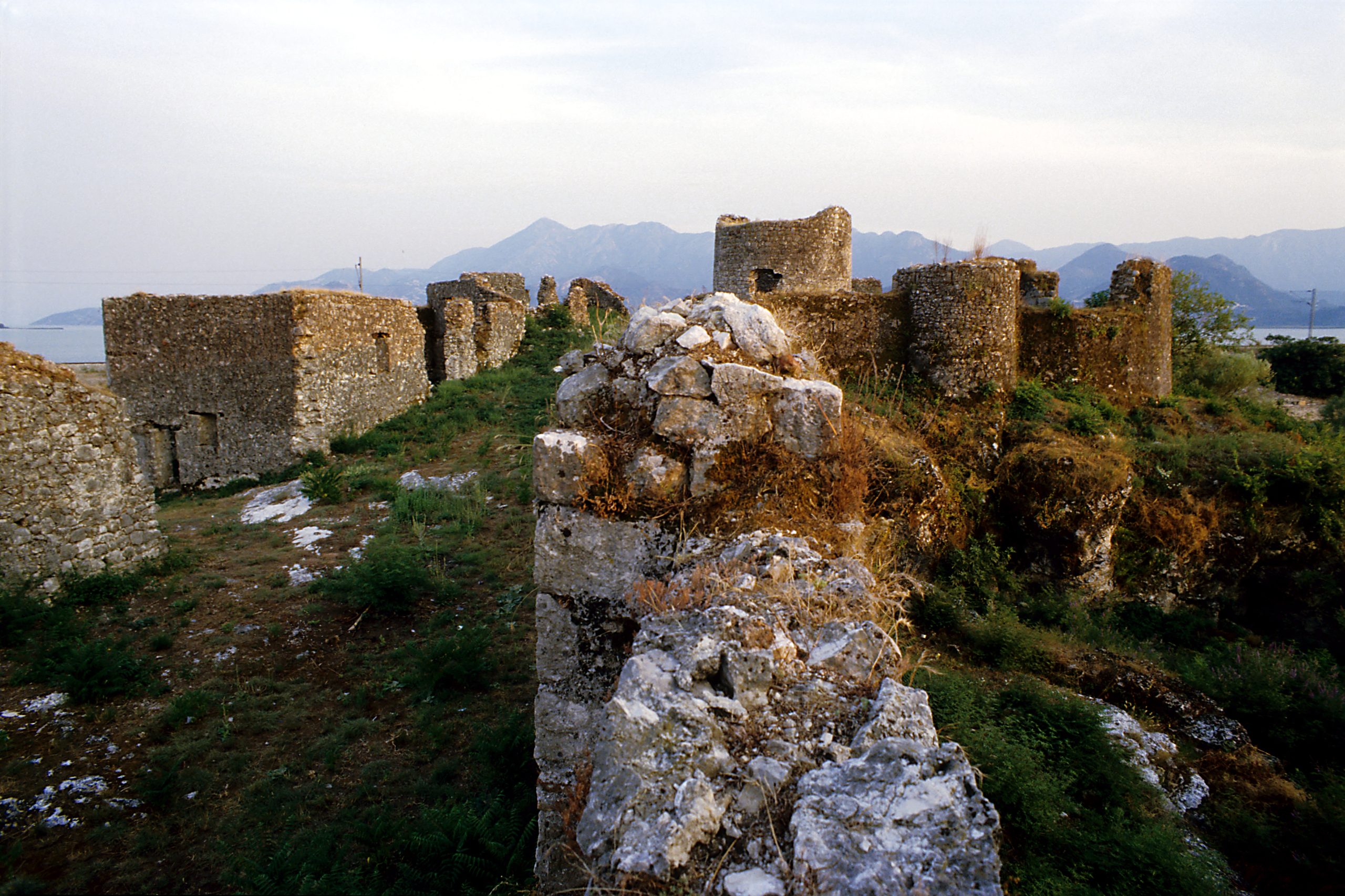
This loss was no ordinary defeat for Njegoš; it was personal. Lesendro wasn’t just a fortress; it was his favourite place on Earth, a sanctuary intertwined with his spirit. The depth of his sorrow left a lasting impression on Montenegrins, inspiring the poignant saying: “like a Bishop’s sorrow for Lesendro.” Even today, this phrase evokes the profound grief that locals associate with the island’s story.
Starčevo Island, nestled along the western coast of Lake Skadar, is a true gem of history and spirituality. As one of the largest islands in the lake, its centrepiece is the magnificent Starčevo Hill, crowned by the oldest church in the area. Built in the 14th century under the patronage of Đurađ Balšić, this sacred site is dedicated to the Mother of Jesus Christ, standing as a timeless tribute to faith and devotion.

The island’s name comes from Anchoret Makarije, whose legacy still whispers through its tranquil atmosphere. But there’s another story that adds a layer of intrigue to Starčevo’s history. According to legend, this very island holds the grave of Božidar Vuković Podgoričanin, a celebrated Montenegrin printer from the 16th century. Božidar played a key role in continuing the Crnojević family’s pioneering printing tradition in Venice, where he printed books in the Montenegrin language.
His connection to Lake Skadar was so profound that, in his will, he expressed a heartfelt wish to have his final resting place along its shores, and Starčevo is said to be that place.
Beška Island, the largest jewel floating in Lake Skadar, is a place where history, faith, and culture intertwine. Its serene beauty is matched only by its rich past, marked by two historic churches that owe their existence to the visionary Balšić family.
Perched atop a gentle hill with a stunning view of the shimmering lake, the first church was built in 1386 by Đurađ Balšić. This grand structure, dedicated to Saint George, stands as a testament to his devotion and the enduring legacy of his family. Its commanding position makes it feel like the island’s guardian, watching over the waters below.

Not far from her husband’s resting place, Jelena Balšić added her own mark to the island’s story in 1439. She constructed her church on the foundations of an earlier one, infusing it with her personal vision and purpose. Jelena wasn’t only a noblewoman but also a patron of culture, and her dream for this church was to make it a vibrant cultural hub. She imagined it as a place where the rich literary traditions of the time would flourish, carrying forward the written word and intellectual heritage.